SPRING 2002 Colloquium
11 AM Mondays, Science Lecture Hall 050
1. Monday, Jan. 28, 2002
Dr. Mukta Singh-Zocchi, Department
of Physics and Astronomy, UCLA
Title: Nanometer-Scale Measurements of Conformational Changes in
Proteins and DNA
Abstract: The ability to undergo functional conformational
changes distinguishes biological macromolecules (proteins, DNA) from inanimate
matter. Recently it has been possible to observe some of these molecular
processes directly, through single molecule experiments. After a brief
introduction to this field I will describe two micro-mechanical experiments
with which we obtain micron scale measurements of conformations in real
time.
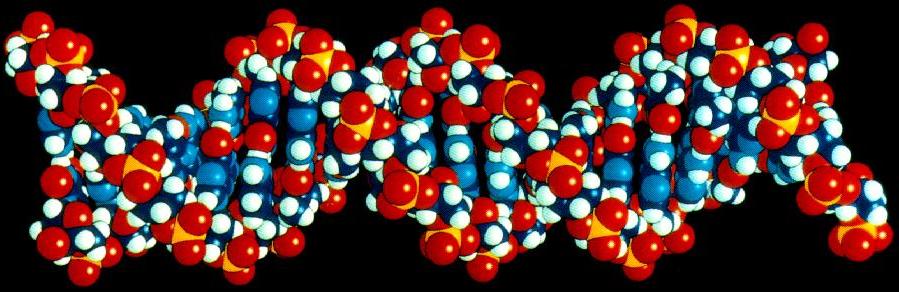
In the first experiment we show that globular proteins under large (~
1-2 nm) deformations maintain a non-zero shear modulus and display a slow
dynamics similar to "creep" in solids.
In the second experiment we detect directly the shortening of DNA oligomers
upon hybridization with a complementary strand.
2. Monday, Feb. 11, 2002
Prof. Elizabeth Potter, Alice Andrews Quigley
Professor of Women's Studies, Women's
Studies Program, Mills College
Title:"Gender Politics and Good Science"
Abstract:
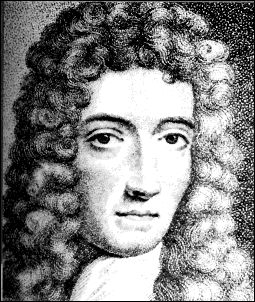
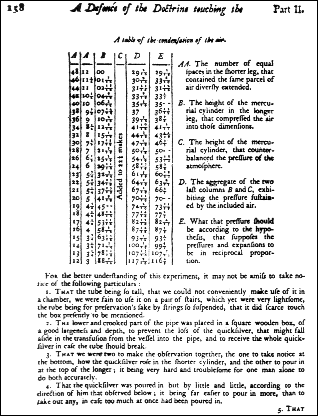
How can we say that Robert Boyle's work leading
to the Ideal Gas Law was influenced by class and gender considerations
and yet maintain that this was excellent scientific work?
How can a scientist like Boyle both engage in
good work based on careful, reproducible experiments and make scientific
choices in the light of the gender and class politics of the time?
We will explore these and related questions.
3. Monday, Feb. 25, 2002
Dr. Zhigang Gong, Cenix Incorporated,
Title: "Helioseismology and physics inside the sun"
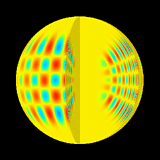
Abstract: Being the closest star from earth, the sun provides
us a unique opportunity to study the physical characteristics of stellar
material in both space and time domain. By investigating the behavior of
millions of observed p-mode oscillation modes, helioseismology further
extends our knowledge from the surface of the sun to the solar interior.
Combining the information from helioseismology and the equation of
state of the solar material, we find a new method to detect the heavy element
abundance down to the solar convection zone. Such information also helps
us to understand the physical processes that cannot be tested in terrestrial
laboratories.
4. Monday, Mar. 4, 2002
Mr. Rajesh Ojha, Department
of Physics and Astronomy, UCLA
Title: "An Application of Statistical Mechanics to an Athermal System"
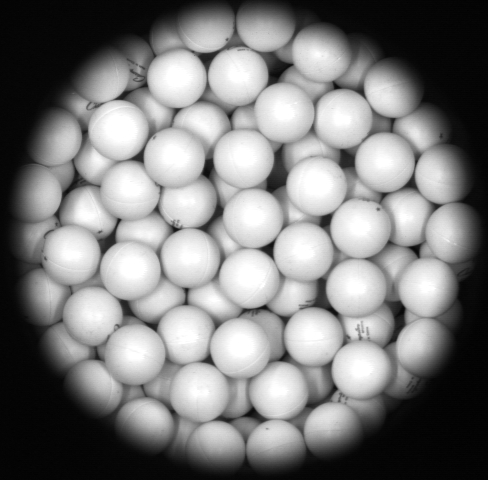
Abstract: It is well-known that granular materials are far too
massive to be affected by room-temperature thermal fluctuations.
To induce motion in a granular pile, one must provide some sufficient external
force. The grains then interact only via hard-core repulsions and
frictional forces which dissipate energy from the system. The grains
therefore do not explore phase-space states of varying energy in the same
manner as fluid molecules, and statistical mechanics appears to be unavailable
for use in describing the motion of granular systems. In this talk,
I will discuss a simple granular system for which we find that a statistical
mechanics description is truly applicable.
5. Monday, Mar. 11, 2002
Prof.
Lillian McDermott, Department
of Physics, University of Washington
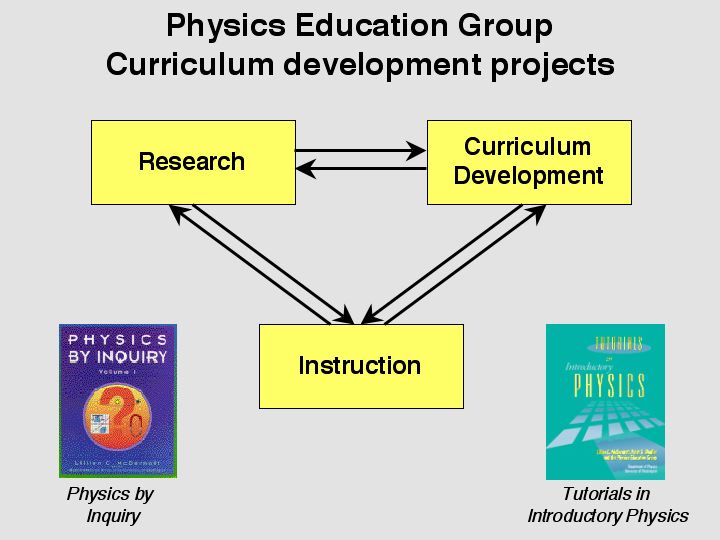
Title: "Discipline-based research on learning and teaching:
The key to more effective instruction in physics and other sciences"
Abstract: The difference between what is taught and what is
learned is often greater than most instructors recognize. The discrepancy
is documented through research in which we examined how well undergraduate
and graduate students and K-12 teachers understand some basic physical
concepts. Examples are used to illustrate how discipline-based education
research can improve student learning. The perspective that teaching
is a science as well as an art has strong implications for undergraduate
instruction, for K-12 teacher preparation, and for the professional development
of graduate students for their role as future faculty. Although the
context is physics, analogies can readily be made to other sciences and
mathematics. Research on learning and teaching conducted by scientists
in science departments can provide the key to setting realistic standards,
to helping students meet expectations, and to assessing the extent to which
real learning takes place.
6. Monday, Apr. 8, 2002
Prof.
Richard Haskel, Department of
Physics, Harvey Mudd College.
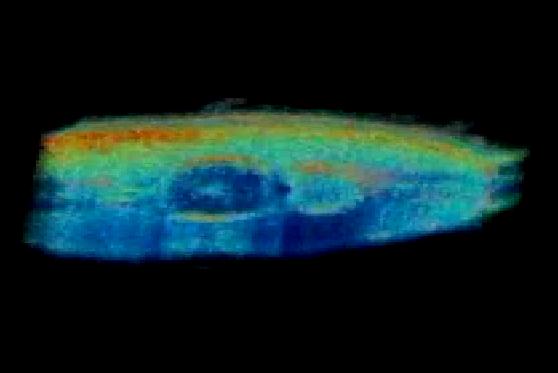
Title: "Optical Coherence Tomography (OCT):
A Non-invasive Imaging Technique for Biological Tissue"
Abstract: OCT arose about 10 years ago
to meet an imaging need in ophthalmology. It was quickly adopted
as a non-invasive probe of skin, and because the instrument is fiber-based,
it has been used through an endoscope to examine the linings of the esophagus
and the GI tract. Recently OCT has been performed through a catheter
to aid in the identification and removal of occlusions in arteries.
It also serves as an ideal research tool for studying dynamic processes
in the early development of plants and animals.
I will describe the physical principles of OCT,
including its reliance upon a near-infrared light source with a short coherence
length, and its sensitivity to Bose-Einstein photon bunching. I will
also describe the motion-sensitive technique of Doppler OCT that is used
to measure blood flow in small vessels. As an illustrative example
drawn from our own lab, time-lapse movies will be shown of gastrulation
in a frog, the first major developmental event in the life of a vertebrate.
7. Monday, Apr. 15, 2002
Prof. Peter Taborek, Department
of Physics, UC Irvine
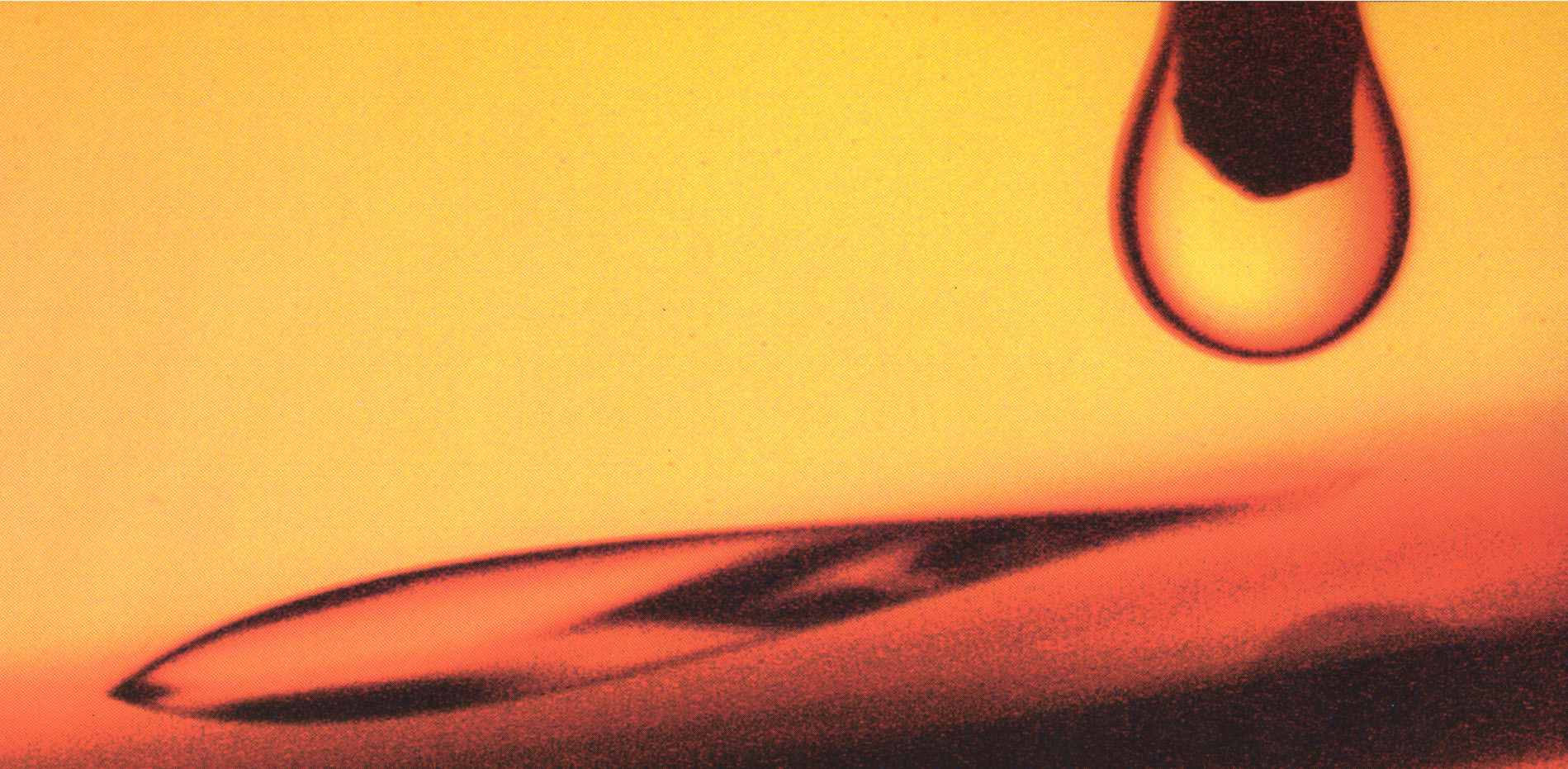
Title: "Wetting , Prewetting and Sticky Superfluids"
Abstract: Superfluid helium films have played an important role
as a model system for studies of phase transitions. Recently it has become
clear that helium films on alkali metal substrates have a completely
different phenomenology from helium on any conventional substrate such
as copper, silicon, or mica. Helium on alkali metal substrates displays
wetting and prewetting transitions, and it is possible to form superfluid
drops, which will be shown in a video. The behavior of superfluids on these
unusual substrates is counterintuitive.
8. Monday, Apr. 22, 2002
Prof.
Krzysztof Slowinski, Department
of Chemistry and Biochemistry, CSULB
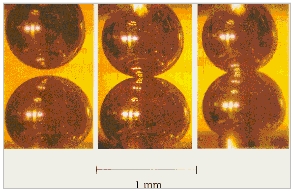
Title: "Long-range electron transfer in macroscopic tunneling junctions"
Abstract: Electron tunneling experiments involving macroscopic
Hg-Hg junctions incorporating two alkanethiolate monolayers will be described.
I will discuss the influence of chain disorder on the efficiency of electron
tunneling across single and two-component alkanethiolate bilayers.
The electron tunneling through a two-component monolayer is less efficient
than tunneling through a single-component well organized monolayer.
This result is rationalized in terms of diminished electronic coupling
across disorganized systems.
9. Monday, Apr. 29, 2002
Prof. Gregory
Holk, Department
of Geological Sciences, CSULB
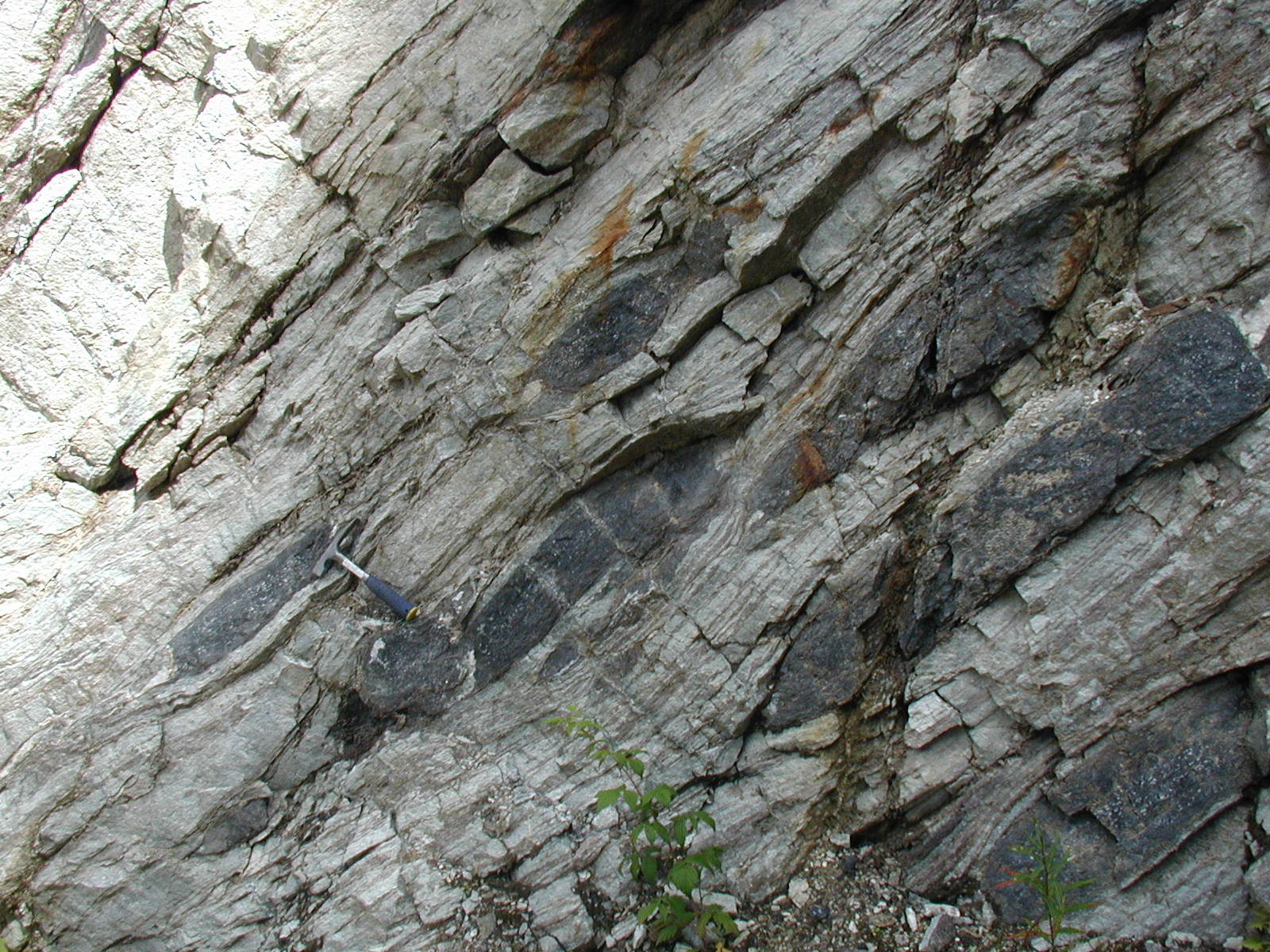
Title "Stable Isotope Probes and Water-Rock Interaction in the Earth's
Crust"?
Abstract: The mass dependent fractionation of hydrogen and oxygen
isotopes between water and minerals varies as a function of temperature.
This provides for the tracing of the intensity of water-rock interaction
as well as the identification of fluid sources for ancient hydrothermal
systems. I will describe case studies that utilize the distribution
of stable isotopes to determine histories of water-rock interaction, pathways
of fluid-flow, the influence of water on the tectonic evolution of mountain
belts, and the role of water in the partial melting process. The
practical application of stable isotopes for mineral exploration will also
be discussed.
10. Monday, May 13, 2002 MILLER
COLLOQUIUM
Dr. Kristen R. Lorentzen Aerospace
Corp.
Title: "Balloon and Satellite Observations of Auroras and Other
Magnetospheric Phenomena"
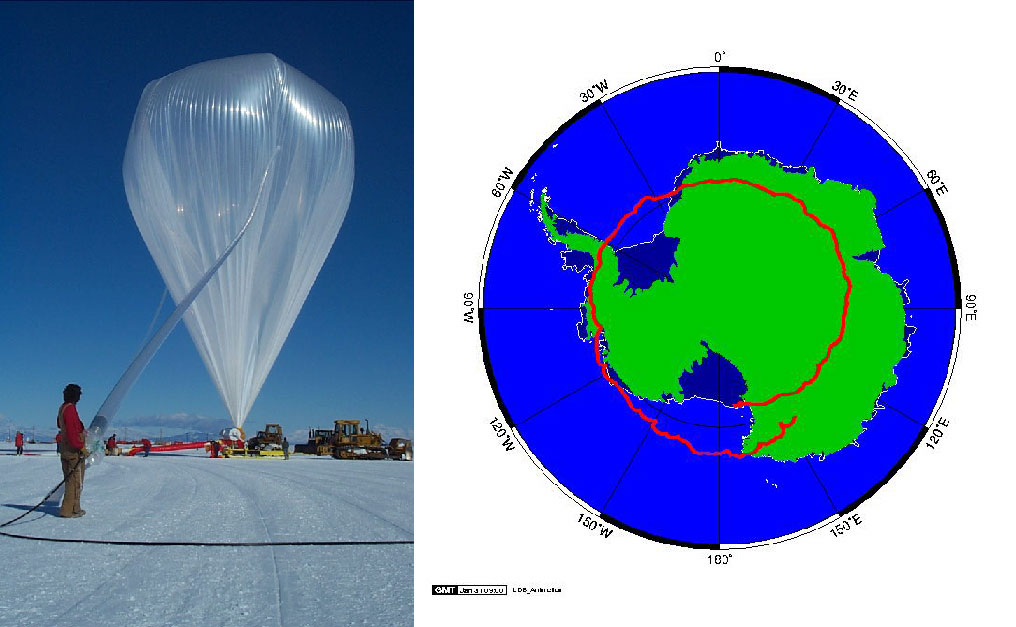
Abstract: Energetic electrons in the magnetosphere can be extremely
hazardous to satellites and humans in space. We are particularly
interested in understanding relativistic electron dynamics and how these
particles are lost from the Earth's radiation belts through a process known
as precipitation. We use Antarctic long-duration balloon flight observations
as well as satellite measurements to study how energetic electrons are
lost to the atmosphere.
last updated May. 6, 2002